Ballin & Associates
  • HOME
  • ABOUT
    • Philosophy
    • Practice Areas >
      • Motor Vehicle Accidents
      • Wrongful Death
      • Brain Injuries
      • Workplace Injuries
      • On-Duty Police Injuries
      • On-Duty Firefighter Injuries
      • Defective Premises
      • Slips, Trips & Falls
      • Injuries to Children
      • Defective Products
      • Assaults
      • Negligent Security
      • Inadequate Warnings
      • Inadequately Trained Employees
    • Attorneys >
      • Steve Ballin
      • Richard Miller
      • Paul Johnson
      • Zachary Ballin
      • Jared Ballin
    • Results
    • Compensation
    • Referrals
    • Charitable Giving
    • VIDEO VAULT
  • PERSONAL INJURY
  • POLICE
    • Areas of Practice >
      • Cruiser & Motorcycle Accidents
      • Stolen MV Pursuits
      • Directing Traffic
      • Road Jobs & Other Details
      • Resisting Arrest & Protective Custody
      • Defective Premises
      • Dog Bites & Knockdowns
      • Domestic Disputes
      • Foot Pursuits
      • Injuries During Rescues
      • Ice & Snow
      • Shootings
      • Toxic Substance & Disease Exposure
    • FAQ's
    • Departments Served >
      • Testimonials
    • Workshops
    • Results
  • FAQ's
    • I Was in Crash. Now What?
    • Choosing a Lawyer
    • Compensation
    • Filing a Claim
    • Types of Accidents & Injuries
    • Do I Have to go to Court?
  • BLOG
  • CONTACT

$100,000 FOR INJURED OFFICER DESPITE INSURANCE DENIAL

10/17/2018

 
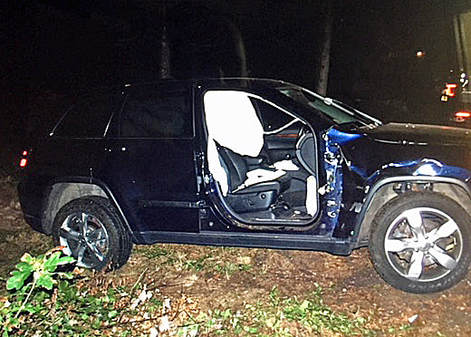
PictureRaymond might not have had his parents’ permission to drive – probably because he was high on mushrooms and running around in his underwear.
Around 7:30 pm, wearing only his underwear, Raymond Bishop is high on mushrooms and out of control at his family home. Raymond’s parents call the police and go through the house collecting car keys; however, there is still a set of keys in his mother’s Jeep. Raymond runs outside and past the responding police officer, Andrew Force.

Raymond enters the unlocked Jeep through the front passenger door, crawls over to the driver’s seat, and starts the engine.  He puts the car in reverse and accelerates down the driveway, catching Officer Force with the opened passenger door. The force of the impact pins Officer Force’s right shoulder in between the door and the side of a trailer on the Bishops’ property.  Raymond backs out of the driveway, across the road, and into the woods, dislodging large rocks and ripping out several tree stumps along the way. The Jeep finally comes to rest atop a stone wall. Raymond is arrested and later found guilty of reckless operation, operating under the influence, and resisting arrest.

As for Officer Force, along with a traumatic hematoma to his right forearm, he sustains a right shoulder labrum tear, which requires surgical repair, physical therapy, and steroid injections. In all, Officer Force’s injuries keep him out of work for nine months.
We submitted a claim for Officer Force’s damages against Raymond with the Bishops’ auto insurer, which, in turn, denied the claim. The insurer’s investigation revealed that Raymond’s parents verbally forbid him from driving. Therefore, the denial was based on Raymond’s non-permissive use of his parents’ Jeep. We sent our own private investigator to the Bishops’ home and our investigator secured an interview with Raymond’s mother.

As it turns out, the question whether Raymond had permission to drive the Jeep was not as simple as the Bishops’ insurer made it seem. Raymond’s mother told our investigator that Raymond had permission to use the family vehicles at any time. She added that the insurer’s investigator had framed his questions in such a way that she had to answer differently than she intended. For example, she was asked if Raymond was in the right frame of mind to drive. And she was asked if she specifically gave Raymond permission to drive. The answer to those questions clearly was ‘no’.

We considered our options: 1) File a lawsuit and secure a judgment against Raymond. Then, to collect on the judgment, file a second lawsuit against the Bishops’ auto insurer, which would turn on whether we could convince a jury that Raymond’s use of the Jeep was permissive; or 2) Drop the claim against Raymond and pursue an Uninsured claim with Officer Force’s own auto insurer. In addition to the time and risk inherent with litigation, there were practical money considerations. Given the amount of the Town’s Ch. 41 lien against third-party recoveries and the anticipated costs of lengthy litigation, Officer Force would likely clear more money from a first-party claim against his own auto insurance than he might get years in the future through litigation against Raymond and the Bishops’ insurer.

Officer Force ultimately decided to drop the claim against Raymond and we obtained a $100,000 policy limit settlement with his auto insurer under his coverage for injuries caused by Uninsured autos. Fortunately, Officer Force had this Uninsured coverage. It is very important that our public safety officers understand that their personal auto insurance policies protect them as pedestrians, when traveling in someone else’s vehicle, or even while in a police cruiser. CLICK HERE to learn more.

– Jared Ballin, Esq.

​In order to protect the privacy of the injured police officer and witnesses, all names have been changed.  Any resemblance to names of real persons, past or present, is merely coincidental and not intended.  The injured officer agreed to have this article published in order that public safety officers around the Commonwealth be better educated about their legal rights to compensation when injured on duty.
$500,000 AND FULL WAGE BENEFITS FOR SPECIAL OFFICER INJURED-ON-DUTY

8/9/2017

 
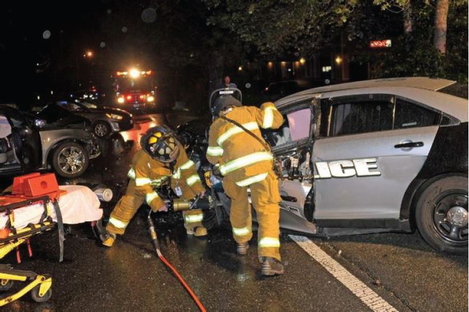
PictureTrapped inside the cruiser, Officer Avery wakes up to the sounds of firefighters using a reciprocating saw to detach the mangled driver door.
Erica DiMaio suddenly veers over double yellow lines on Main Street. Three eyewitnesses watch in horror as Ms. DiMaio violently crashes head on into a police cruiser operated by Officer Avery.


The Fire Department is already on scene by the time Officer Avery comes to. He wakes up to the sounds of firefighters using a reciprocating saw to detach the mangled driver door from the cruiser. Freed from the cruiser, Officer Avery is taken by helicopter to the hospital where he would remain for over two weeks.


Officer Avery’s injuries were numerous: concussion, fractured left arm and leg, five fractured ribs, and multiple lacerations. The left arm fracture required three procedures, including a surgery to implant permanent hardware. His road to recovery included extensive therapy. Despite continuing symptoms in his arms and legs, Officer Avery worked diligently with his therapists to regain strength and motion. Just shy of nine months after the crash, Officer Avery was cleared for a return to work. Officer Avery surprised everyone. He pushed his doctors to clear his return long before many thought he would be medically able. Officer Avery’s doctors and therapists documented his dedicated efforts towards his own recovery as well as his desire to return to work.

We met Officer Avery while he was still in the hospital. He expressed his good fortune to have survived this horrendous crash. However, he stressed about how he would support his family. As a ‘special’ officer, Officer Avery works part time for his municipality. Not only was he too injured to work as a police officer, he could not resume his regular occupation.

We decided to feature Officer Avery’s case not just for the monetary result, but also to inform special, reserve and part time officers of certain injury-on-duty benefits, which may be available to them. Like many police officers and firefighters working on a ‘special’, reserve or part time designation, Officer Avery relied on a second, regular occupation to support his family.

Many special officers and part time officers are unaware that Massachusetts law provides protection for special officers like Mr. Avery who are unable to work their regular occupation because of an injury-on-duty. In most circumstances, M.G.L. Chapter 32 §85H affords compensation equivalent to the average weekly pay of a first-year public safety officer while the officer is unable to work their regular occupation because of the injured-on-duty. We have found several municipalities to be unaware of this provision. This municipality was no exception.

We worked with Officer Avery’s municipality to ensure these benefits were made available to Officer Avery for the entire period he was unable to work his regular occupation. These injury-on-duty benefits helped Officer Avery survive financially while he was out of work rehabbing from his injuries. As for Officer Avery’s injury claim against Ms. DiMaio, we secured a ‘policy limit’ settlement with her insurance company for $500,000 after holding steadfast in our refusal to accept anything less. And we did all this without ever filing a lawsuit.

If you are a reserve, special or part time officer injured-on-duty and cannot return to your regular occupation, like Officer Avery, you too may be able to make a claim for full and fair compensation and receive full injury-on-duty wage benefits while you recover from your injuries.

– Jared N. Ballin, Esq. & Steven M. Ballin, Esq.

$150,000 FOR OFFICER EXECUTING SEARCH WARRANT

3/21/2017

 
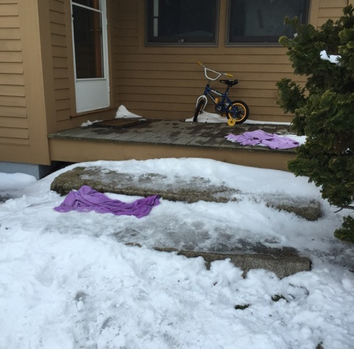
PictureWarrant in hand, the police search an apartment and seize a bag filled with heroin. A job well done but they still must get past the snow-covered steps on their way out.
A landlord’s tenant is the subject of a drug investigation by a joint task force.  With three knock and announce narcotic search warrants in hand, the police enter the landlord’s multi-unit rental property through the front entrance without incident.  The police search the tenant’s second floor apartment.  The police find a bag filled with heroin and the tenant is taken into custody.

While leaving the building, a local police detective slips and falls on snow and ice covered granite steps attached to the front porch.  As you may know, it is often more dangerous coming down icy stairs than going up.  The detective suffers a complete rupture of the patella tendon in his left knee.  Less than two weeks later, he had surgery under general anesthesia to repair his knee.  The detective’s condition improved with time and despite some continuing symptoms, he was cleared for a full return to work just over five months after his fall, including a short stint on light duty.

We have been making a habit of stressing the importance of documenting ice falls with photographs right away.  This case was no exception.  Similar to a case we reported on a few months ago, a fellow officer took plenty of photographs to document the condition of the stairs soon after the detective’s fall.  The photos clearly showed the front entrance covered in a thick layer of hard packed snow and ice.  In addition, the photos indicated an absence of any gutter system to direct melt water away from the roof above.  The absence of gutters allowed melt-water to drip down and refreeze to form melt water ice on the front entrance.

The photographs were critical in enabling us to settle the detective’s case with the defendant’s landlord for $150,000 without having to file a lawsuit.  Had we needed to involve the Court, the photographs would have been a crucial part of the case.

Aside from the importance of photographs, here is the takeaway for public safety officers around the state – landowners must keep their property safe for visitors where people are expected to walk.  Moreover, this holds true regardless of why you are legally at a property.  Whether it be responding to a domestic call, serving a search warrant, or anything in between, it does not change the fact that you are a lawful visitor and the landowner has a continuing obligation to make it safe for you to walk on the property.

That said, Massachusetts law is reasonable.  It recognizes we live in New England.  There is no expectation that every speck of snow and ice be removed from someone’s property.  The law does, however, impose a duty on landowners to use reasonable care in all circumstances.  Typically, this involves shoveling after a storm or putting down sand or rock salt on icy areas.  This photograph tells another story: the landowner chose to neglect the buildup of snow and ice, endangering all visitors to the property, including emergency responders.

To protect the privacy of the detective and witnesses, all names have been changed.  Any resemblance to names of real persons, past or present, is merely coincidental and not intended.

– Jared N. Ballin, Esq.

The injured detective agreed to have this article published in order that public safety officers around the Commonwealth be better educated about their legal rights to compensation when injured.

$6 MILLION PAID TO FAMILY OF OFFICER KILLED ON DETAIL

3/21/2017

 
PictureA contractor’s poorly planned work site cost a police officer his life. After years of blaming everyone else, lies were exposed and the contractor paid.
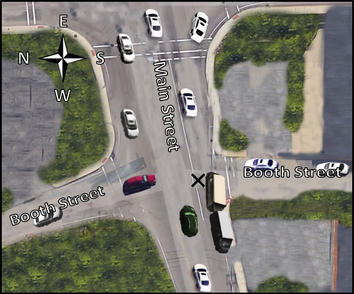
A contractor parks two large utility trucks back to back while setting up for an ongoing project on Main Street at an intersection with Booth Street.  There is heavy traffic in this area with vehicles approaching the work site from multiple directions.  Many of the vehicles pass alongside the two trucks and crew, while others come out of Booth Street entering the intersection from the north and south on either side of Main Street.  The contractor hires Officer Jeffrey to work this detail.  No other detail officers were hired.

Later that morning, two drivers approach the southbound lane of travel on Booth Street from different directions: Mr. Green approaches from the west (green car) on Main Street and Mr. Reach approaches from the north (red car) on Booth Street.  Facing west alongside the first truck, Officer Jeffrey directs vehicles past the trucks on Main Street.  Mr. Reach then crashes into Mr. Green’s vehicle as it passes by Officer Jeffrey.  Reach’s car then veers into Officer Jeffrey.  Officer Jeffrey is pinned against the contractor’s truck and killed.  Officer Jeffrey never saw Reach’s car approaching across the intersection from Booth Street.

The State Police investigation focused on Mr. Reach.  He was charged with and pled guilty to vehicular homicide.  There was, however, no investigation made regarding the contractor’s traffic control plan.  Nevertheless, I believed that the contractor blocked the southbound lane on Booth Street without planning for or warning traffic.  Therefore, I filed a lawsuit not only against Mr. Reach, but also against the contractor.

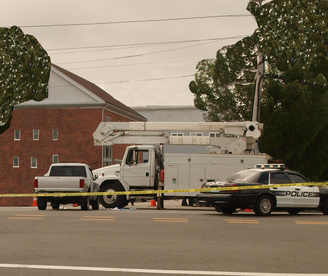
Photographs released after Mr. Reach’s criminal case was over confirmed that one of the contractor’s trucks blocked the entire southbound lane on Booth Street.  And after dozens of depositions, I discovered that besides Officer Jeffrey, the sole officer hired for the detail, the only traffic control devices utilized by the contractor were two ‘work ahead’ signs on either side of the work site on Main Street and a few cones alongside the two trucks.  As often happens to officers hired on details, Officer Jeffrey was left to cope with the confusion, congestion, and traffic as best he could in this busy, four-way intersection.

PictureOne of the contractor’s trucks blocked the entire southbound lane on Booth Street.
The contractor’s crew leader testified he filled out a job brief form before occupying the work site, which detailed the traffic control plan.  Suspiciously, the contractor lost that document.  I also discovered two of the contractor’s supervisors were at the work site long before the crash.  Each was responsible to train the crew on setting up traffic plans for work sites.  Conveniently, neither supervisor could recall what the set up was for this work site.

The four crew members and two supervisors then testified the truck did not block the southbound lane of travel on Booth Street.  Fortunately, the responding officers took hundreds of photographs of the scene, two of which clearly depicted the truck blocking the entire southbound lane on Booth Street.  I used these photographs to impeach each of the contractor’s employees.  I also confronted them with the contractor’s own manual for setting up its work sites.  All four crew members, including the two supervisors, were unaware their own manual had a specific diagram detailing how to set up a work site with a blocked lane of travel on one side of a four way intersection.  Finally, I got each of the contractor’s employees to admit no warning signs were put out on either side of Booth Street.  Warning signs about a change in the traffic pattern would have prepared drivers like Mr. Reach before he ever got to the intersection.

From the outset, the contractor refused to accept any responsibility for the crash which killed  Officer Jeffrey.  Instead, the contractor put all the blame on Mr. Reach.  However, the law recognizes that both the contractor and Mr. Reach are responsible if a jury concludes both their negligent acts contributed to cause Officer Jeffrey’s death.  After taking numerous depositions, chasing down documents and the retention of expert witnesses, I was able to prove the contractor’s negligently deficient traffic plan contributed to the crash.  Following mediation and just months before trial, the contractor and Officer Jeffrey’s estate agreed to settle this case for $6 million.  While I am deeply saddened for Officer Jeffrey’s family, I am grateful they now have the financial resources to support themselves for the rest of their lives.

– Steven M. Ballin, Esq. & Jared N. Ballin, Esq.

To protect the privacy of the deceased officer’s family and witnesses, all names have been changed.  Any resemblance to names of real persons, past or present, is merely coincidental and not intended.  The deceased officer’s estate agreed to have this article published so police officers around the Commonwealth can be better educated about work zones and their legal rights to compensation when injured.

$225,000 FOR OFFICER IN CRUISER HIT IN AN INTERSECTION

12/7/2016

 
Picture
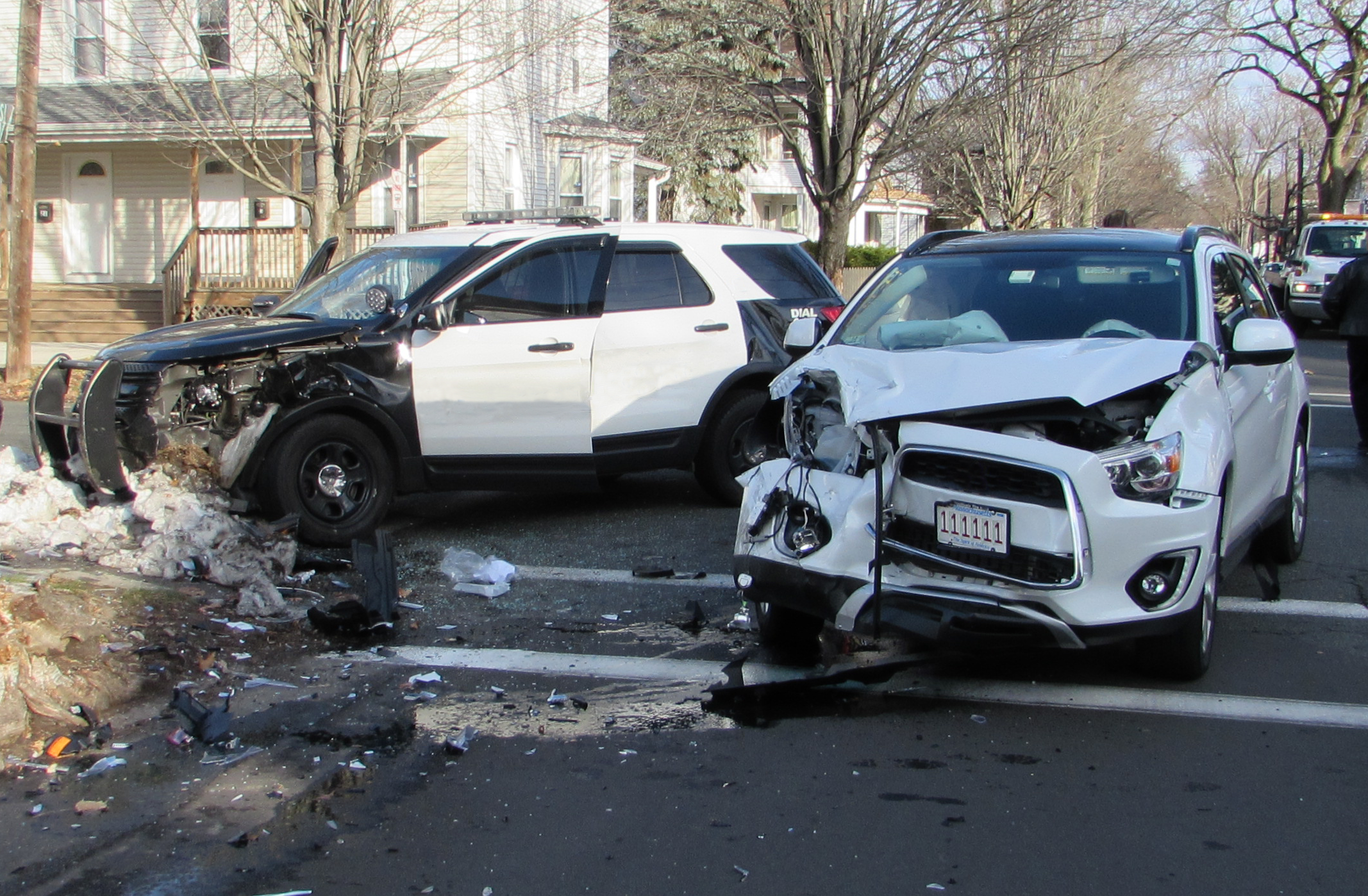
Paul Arret drives north, approaching an intersection in a residential neighborhood with his grandson in the front passenger seat. A police cruiser drives west approaching the same intersection.  Mr. Arret has a stop sign. The police officer does not. Mr. Arret does not stop. The two vehicles collide in the middle of the intersection.

​Francis Vision was standing close by and saw the whole thing. Mr. Vision tells the responding police that Mr. Arret’s vehicle ran the stop sign. The police then talk to Mr. Arret’s grandson who says that his grandfather blew the stop sign. Mr. Arret joins in as well, admitting that he was not paying attention.

As a result of the crash, the officer driving the cruiser tore his left rotator cuff tear and ruptured his biceps tendon. He needed arthroscopic surgery and had extensive physical therapy. About nine months after the crash the officer was able to return to work full duty. About a year after his return, we secured a $225,000 settlement for the officer.

– Jared Ballin, Esq.

To protect the privacy of the officer and witnesses, all names have been changed.  Any resemblance to names of real persons, past or present, is merely coincidental and not intended.

$1 MILLION FOR OFFICER’S FRIEND CUT OFF BY CAR

6/30/2016

 
Picture
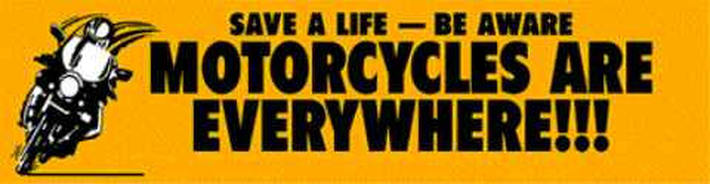
Mr. Driver travels down a road he knows very well on a clear, Fall day.  He readies himself to turn left into a gas station. Sitting in the front passenger seat is his wife who sees a motorcyclist approaching from the opposite direction. She yells to watch out. Mr. Driver does not yield the right of way to the motorcycle. Instead, he turns left toward the gas station and cuts off the motorcyclist. The motorcyclist crashes into the side of Mr. Driver’s car, ejects from his seat, hits the car and lands in the roadway. The motorcyclist is our client, Arthur Vee.

Arthur sustained a fractured right arm and fractured right lower leg.  He had surgeries where plates and screws were implanted to repair his fractures. After filing a lawsuit against Mr. Driver, we discovered he had a $1,000,000 umbrella insurance in addition to his $250,000 auto insurance policy. We quickly deposed all witnesses, including an eyewitness, who testified Mr. Driver cut off our client. We also deposed Mr. Driver, who, as it turns out, is a licensed optometrist. Nevertheless, Mr. Driver claimed during his deposition that he did not see the motorcycle until it was too late, even though his wife yelled to him to watch out for the motorcycle.

After months of inpatient and outpatient care, Arthur was able to return to work as a machinist, albeit in a limited capacity. Nearly a year and a half after the crash, Arthur was just starting to enjoy his life again when his right leg gave out while walking with his cane in an icy parking lot. His right upper leg fractured in the fall. He needed yet another surgery with more hardware. We argued this new fracture was caused by the crash because Arthur’s leg was still weak. However, Mr. Driver’s insurance company and defense lawyer refused to accept responsibility for the new fracture. We then met with Arthur’s surgeon who pointed out that Arthur’s right upper leg bone appeared fine in X-rays right after the crash; however, it appeared weak in X-rays taken before the fall in the parking lot. This weakness resulted from not being able to use his right leg after the crash during non-weight-bearing rehabilitation. Also, the area of weakness was in the exact location that was affected by the low energy fall in the parking lot. After careful review of Arthur’s X-rays before and after the fall in the parking lot, Arthur’s surgeon attributed all of the injuries, including those from the fall, to the original crash with Mr. Driver.

With the compelling deposition testimony and strong opinion of Arthur’s surgeon, we were able to reach a settlement for $1,000,000 at mediation, with $250,000 coming from Mr. Driver’s auto insurance and the remaining $750,000 coming from his umbrella policy.

​A local police officer, Gerald Seine, was off duty and riding his own motorcycle ahead of his close friend Arthur at the time of the crash. Knowing the results we have obtained for injured officers, Officer Seine referred Arthur to us. We were glad to represent Arthur and are always available to assist the friends and family of police officers.

– Steven Ballin, Esq and Jared Ballin, Esq.

$20,000 FOR OFFICER BITTEN BY HOMEOWNER’S DOG

2/2/2016

 
Picture
In a quiet, residential community, a neighbor hears screaming from the backyard next door. The neighbor reports this to the police who respond to the house to check on the disturbance.

The police knock on the door and announce themselves. No one answers. The police open a screen door and announce their presence again. Three German shepherds run through the screen door toward one of the officers. One or more of the dogs bites the officer just above her left elbow and inner left thigh. The puncture wounds to the officer’s arm result in a permanent scar. As it turns out, it was one of the homeowners that had been screaming outside.

The homeowners were home and knew they were creating a disturbance. They knew or should have foreseen that the disturbance would attract the attention of their neighbors and police. Nevertheless, the homeowners did nothing to secure their dogs. We reached a $20,000 settlement for our client, the officer, with the homeowners’ insurance company.

4.5 million people are bitten by dogs every year. Almost one of five bites become infected. Keepers of animals must secure, control and prevent them from biting anyone. This includes public safety officers. Over the years we have successfully made claims for dog bites under homeowners, renters and commercial policies. We have made similar claims for injuries resulting from being knocked down or chased by dogs. If you are a dog owner yourself, you might consider reviewing your own insurance policy as certain breeds are often excluded from coverage. Officers injured on or off duty should consult with us early on to learn of your rights and so we can determine whether you have a viable case.
​
– Jared N. Ballin, Esq.

$1 BILLION HIP REPLACEMENT SETTLEMENT

11/11/2014

 
Picture
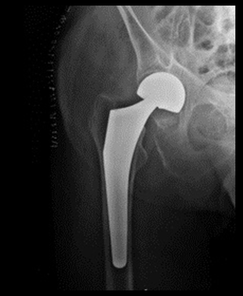
In 2012, Stryker Corp. recalled two of its hip replacement systems – the Rejuvenate and ABG ll.  In all, about 20,000 people were implanted with one of those systems.  Among the dangers associated with these devices are adverse reactions resulting from large quantities of metal entering a patient’s bloodstream and tissue.

Thousands of people across the country have filed lawsuits against Stryker Corp. for damage caused by the two recalled hip replacement systems.  A recent settlement covers around 3,000 patients in 39 states who already had revision surgery to remove the implant before Nov. 3, 2014.   The settlement is ‘uncapped’ as Stryker agreed to pay at least $1 billion, but total payouts are estimated to be much higher.  In fact, Stryker announced that it had set aside more than $1.4 billion.  Patients deemed by their surgeon to be physically unable to undergo the revision procedure to remove the recalled implant may also be eligible to make a claim against the settlement.  The claims and lawsuits of patients whose artificial hips were not replaced before Nov. 3, 2014 are not affected by this settlement, but may be covered by a future settlement.  For more information, click here for the official settlement program website.

​It is critical that patients with Stryker hip replacement products quickly consult their surgeon to determine whether they have one of these recalled devices, whether there are signs of the adverse reactions, and whether the device needs to be removed.

​- Jared N. Ballin, Esq.

THE “EGGSHELL SKULL” RULE

8/22/2014

 
Picture
Did a new injury make an old condition worse or act up again? Massachusetts law has your back, so to speak. An injured person has the right to be compensated for a new injury, which aggravates a pre-existing condition.

Since 1935, the law in Massachusetts has been clear that an injured person has the right to be compensated by a negligent third party for the aggravation of pre-existing condition. This is the case regardless of how bad the condition was in the past or was at the time of the recent incident. All that is required is that the condition is made worse. Moreover, the law applies the same to police officers and firefighters who are injured on duty as it would to any other employee injured at work.

An example often used in law school to explain this rule is when a negligent third party cuts a person who is a hemophiliac and that person subsequently bleeds to death from the cut, the third party is responsible for that person’s death, even if another person without this rare condition would not have died from the cut. Essentially, the responsible party must compensate an injured person regardless of how susceptible the person may be to injury. Fittingly, this is what is known as the “eggshell skull” rule.

Over the years, we have successfully brought claims despite the fact that our client’s injury was to a part of the body which had been injured or operated on in the past. As long as the injury is made worse than it was before, the negligent party is responsible for aggravating the condition.

For more information about your right to make a claim involving a pre-existing condition, please feel free to email or call me with any questions.

​- Jared N. Ballin, Esq.


GOT “FULL” COVERAGE?

8/22/2014

 
Picture
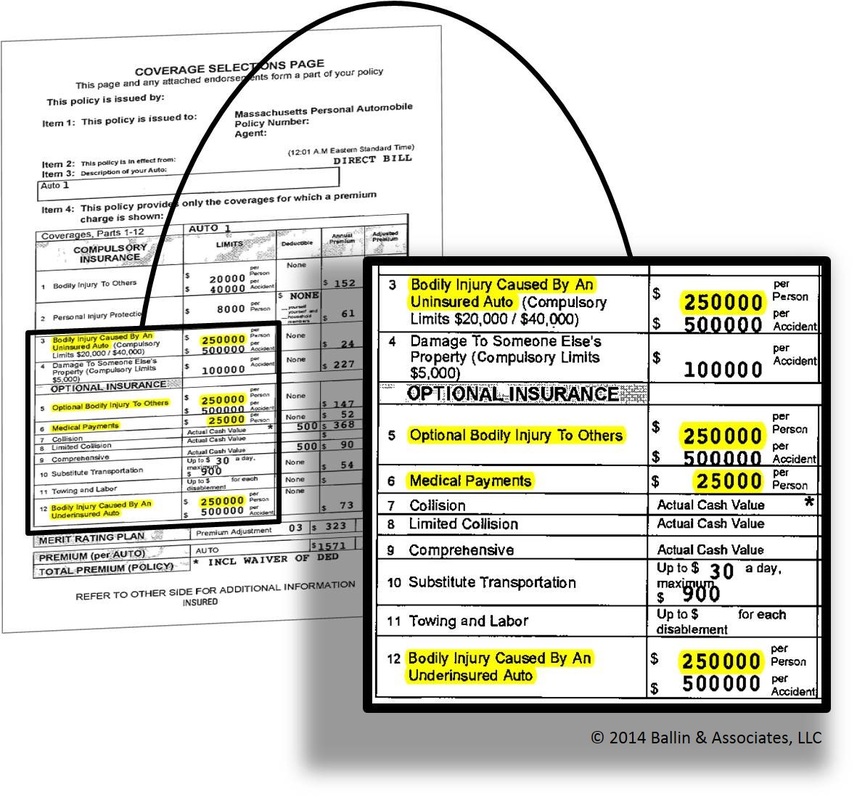
Does this picture look familiar? It should – it is a copy of a car insurance coverage selections page, and a good one to boot. We have highlighted three important Parts, which are often overlooked and, in our experience, not understood: Parts 3, 12, and 6. Find your personal car selections page and compare it with this example. If yours doesn’t look like the example, call your agent immediately to find out what it will cost to increase your current coverage to what we consider to be a good example of “full” coverage.

We advise that our clients carry $250,000/$500,000, or, at least $100,000/$300,000 under Parts 3 and 12. Depending on your current coverage under Part 5 (Optional Bodily Injury to Others), increasing Parts 3 and 12 often costs about the same as buying lunch or dinner. Ask your agent about the cost of increasing those Parts, as seen in the example.

Over the years, we have been very successful making claims under these Parts. Fortunately, some of our clients had protected themselves by increasing these Parts before they suffered harms in a motor vehicle incident. On the other hand, unfortunately, many of our clients did not have enough coverage or no coverage under one or more these Parts.

Here’s a quick summary of how some of the overlooked Parts of your car insurance protect you. For more information about how these and other Parts protect you, feel free to email or call me with any questions.

Part 3
 – Injury caused by an UNINSURED auto:

This Part is important when you are injured as a result of someone using or operating a car that does not have insurance. For example, a car with cancelled insurance or a stolen car are both considered to be an “Uninsured Auto”. If so, your car insurance will pay for your harms up to the amount of protection you purchase under Part 3.

Part 12
 – Injury caused by an UNDERINSURED auto:

Many people are surprised to find they have little or no coverage under Part 12. When the driver that injures you does not have enough insurance to pay for all of your harms, they are considered underinsured. The amount of available coverage under Part 12 for such a loss is determined by subtracting the amount of coverage which the defendant driver has from the amount of Part 12 underinsured coverage which you have purchased. For example, if the defendant driver has the minimum $20,000 per person insurance coverage and you have purchased $100,000 per person underinsured, Part 12 coverage, there will be up to $80,000 available to compensate you for your harms and losses. Together with the $20,000 per person coverage which the defendant driver has in this example, you would have up to $100,000 available from a combination of the defendant’s insurance policy plus your own insurance policy.

You are not allowed to insure your car for more Part 3 Uninsured coverage and Part 12 Underinsured coverage than your car is insured for Part 5 Optional Bodily Injury to Others coverage. So, you will be required to also increase Part 5 Optional Bodily Injury to Others coverage to the same amount of your increased Parts 3 and 12 coverages.

Part 6
 – Optional Medical Payments:

We also recommend our clients purchase as much Part 6 Optional Medical Payments coverage as they can afford. Part 6 often covers medical bills for treatment of your injuries which result from a motor vehicle incident, in a variety of situations. In some situations we collect thousands of dollars under this coverage, even if your medical bills have already been paid by other insurance or an employer.

I have highlighted just some of the most important overlooked Parts of car insurance coverages and the recommendations we make to our clients to best protect themselves. For more information about how these and other Parts protect you, feel free to email or call me with any questions. There are many nuances related to these coverages, far more than I can write about here. You need to start learning about these important coverages. The first step is by checking your own insurance policy to see what you have and compare it to the example we have provided.

​- Jared N. Ballin, Esq.

    ARCHIVES

    October 2018
    July 2018
    April 2018
    March 2018
    January 2018
    August 2017
    May 2017
    March 2017
    December 2016
    November 2016
    June 2016
    May 2016
    February 2016
    October 2015
    April 2015
    March 2015
    February 2015
    November 2014
    October 2014
    September 2014
    August 2014
    September 2013
    April 2013
    March 2013

    CATEGORIES

    All
    Featured Articles
    Insurance
    Jared Ballin
    Mass Heroes
    Paul Johnson
    Police
    Results
    Richard Miller
    Steven Ballin
    Zachary Ballin

    RSS Feed

Powered by Create your own unique website with customizable templates.